Our Location
1103A Tianhui Building, Yeqin 1st Road, Longcheng Street, Shenzhen, Guangdong, China
1103A Tianhui Building, Yeqin 1st Road, Longcheng Street, Shenzhen, Guangdong, China
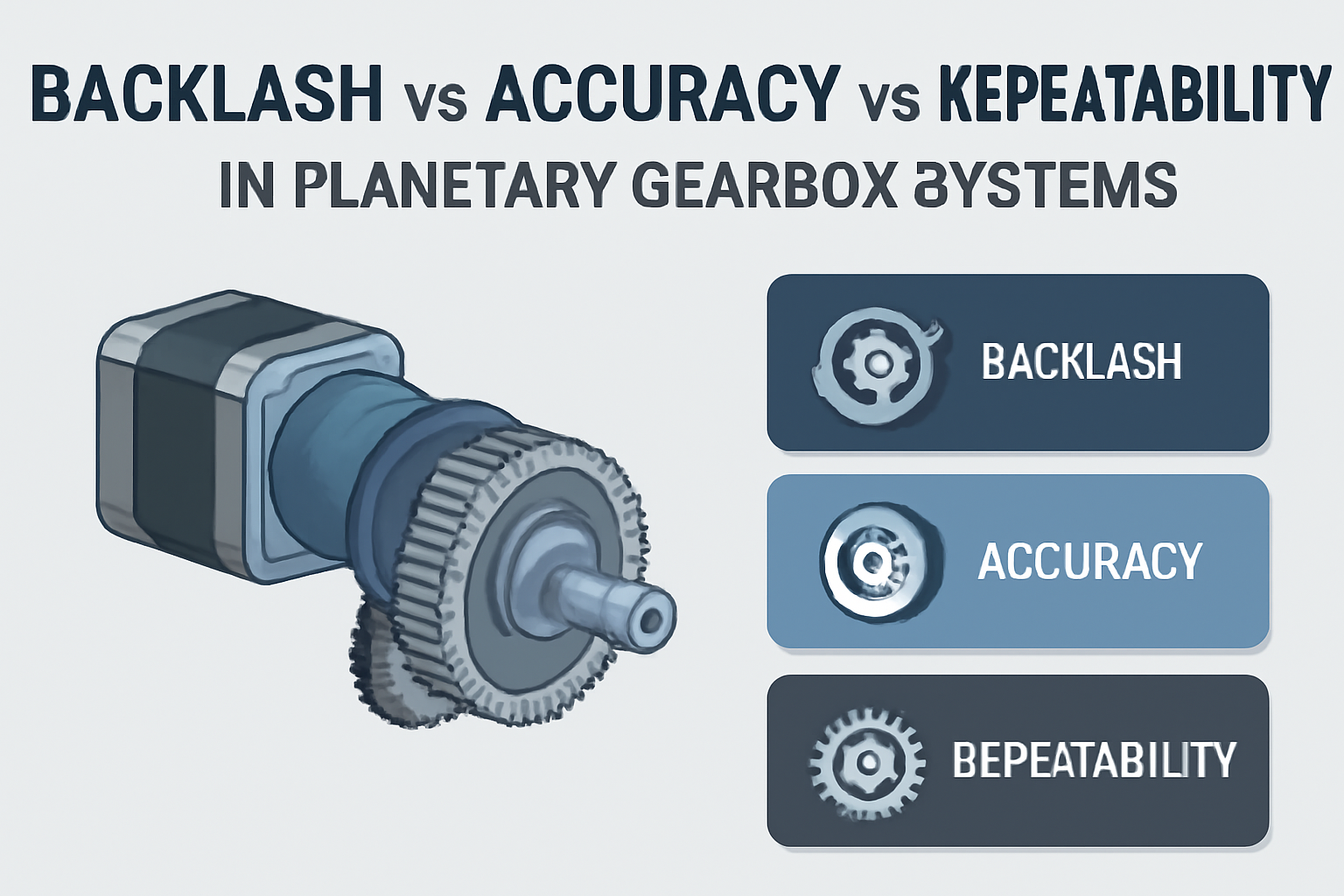
Choosing the correct planetary gearbox ratio is crucial for achieving optimal performance in stepper motors and automation systems. The gear ratio determines the balance between torque, speed, and accuracy in your system. This guide explains how to select the appropriate ratio based on your specific application requirements.
A planetary gearbox’s gear ratio plays a vital role in determining the relationship between input and output speed and torque. Selecting the correct gear ratio can ensure that your mechanical system performs efficiently under varying load, speed, and precision demands.
Gear ratio is the ratio between the input speed and the output speed of a gearbox. It is a key factor in determining the torque amplification and speed reduction in planetary gear systems.
The formula for calculating gear ratio is:
For example, a 10:1 gear ratio means that for every 10 rotations of the input shaft, the output shaft completes one rotation, providing a 10x reduction in speed and a 10x increase in torque.
When selecting a gear ratio, the first step is to understand the specific demands of your application:
Understanding the torque and speed characteristics of your system is crucial for selecting the correct planetary gearbox ratio. Higher gear ratios will increase the output torque, but at the cost of reducing speed.
For instance, if your input torque is 2Nm and the gear ratio is 10:1, the output torque will be 20Nm, but the output speed will be reduced by a factor of 10.
Example calculation:
Similarly, the output speed will decrease:
To calculate the required gear ratio for your application, you need to determine the output speed you need based on the input speed and required torque.
For example, if your system needs an output speed of 100RPM and the input speed is 2000RPM, the required gear ratio is:
This gear ratio provides a moderate increase in torque and is suitable for applications that require a balance between speed and torque. It is commonly used in small robots and low-load automation systems.
The 5:1 ratio is ideal for moderate load applications that require both speed and torque. It is commonly used in precision motion control applications, such as CNC machines and light automation tasks.
The 10:1 ratio provides a significant torque increase, making it ideal for applications where high precision and torque are required. This ratio is frequently used in high-precision CNC systems and robotics.
Gear ratios of 20:1 or higher are suitable for applications that require high torque and low speed, such as conveyor systems, high-torque automation, and industrial machinery.
Here’s an example of how to calculate the required gear ratio for your system:
| Parameter | Value |
|---|---|
| Input Torque | 2Nm |
| Input Speed | 2000RPM |
| Output Speed | 100RPM |
| Required Gear Ratio | 20:1 |
One of the most common mistakes in gearbox selection is choosing an overly high or low gear ratio without considering the application’s specific torque and speed requirements. This can lead to:
Selecting the correct planetary gearbox ratio ensures the system operates efficiently and within the required performance parameters. By considering the load, speed, and precision requirements, engineers can select the best gearbox ratio for their application, leading to improved system performance, durability, and accuracy.
It’s important to understand that increasing planetary gear ratio does not automatically reduce backlash. This misconception is explained in detail in our article Low Backlash vs Zero Backlash .




[…] Integrated planetary gear motors are much more compact compared to separate motor and gearbox systems. By combining the two components into one unit, you save space and reduce the need for additional mounting brackets and coupling components. This is particularly beneficial in applications where space is limited, such as in robotics or small industrial machines. […]