Our Location
1103A Tianhui Building, Yeqin 1st Road, Longcheng Street, Shenzhen, Guangdong, China
1103A Tianhui Building, Yeqin 1st Road, Longcheng Street, Shenzhen, Guangdong, China
Stepper motor are essential components for precise positioning and movement in various applications. Whether you’re building a 3D printer, robotics, CNC machine, or any system that requires accurate control, stepper motors are the go-to solution due to their ability to provide reliable, accurate motion without the need for feedback systems.
Using a stepper motor with Arduino is relatively straightforward. To connect the motor to Arduino, you’ll need a stepper motor driver (such as the A4988 or DRV8825) that controls the motor’s steps and direction. The Arduino sends control signals to the driver, which then powers the motor. Here is a basic example of using a stepper motor with Arduino:
#include // Define number of steps per revolution #define STEPS 200 // Create stepper motor object Stepper myStepper(STEPS, 8, 9, 10, 11); void setup() { myStepper.setSpeed(60); // Set speed (RPM) } void loop() { myStepper.step(STEPS); // Move one revolution delay(1000); }
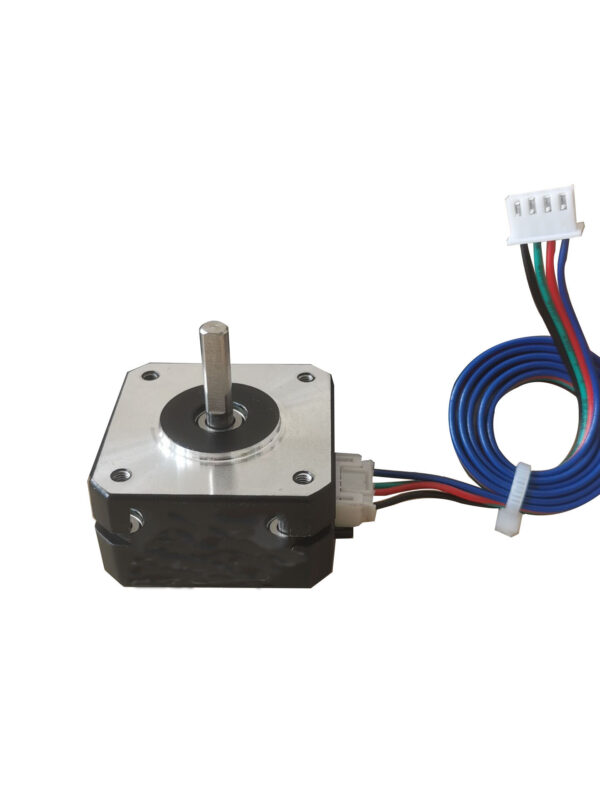
Stepper motors come in a variety of sizes, with the most common sizes being NEMA 17 and NEMA 23. These numbers refer to the motor’s mounting face dimensions in inches. For example, NEMA 17 motors have a 1.7-inch square mounting face, while NEMA 23 motors have a 2.3-inch square mounting face. The larger the motor, the more torque it can produce, but it will also require more power.
| Size | Mounting Face | Typical Torque | Common Applications |
|---|---|---|---|
| NEMA 17 | 1.7 inches (43.2 mm) | 30-80 Ncm | 3D Printers, CNC Machines |
| NEMA 23 | 2.3 inches (57.2 mm) | 80-200 Ncm | Robotics, Automation |
| NEMA 34 | 3.4 inches (86.4 mm) | 200-800 Ncm | Heavy-duty CNC Machines, Large Robotics |
There are several types of stepper motors available, each with its unique features and performance characteristics. These include:
PM steppers are simple and inexpensive. They are often used in applications where low to medium torque is required. The rotor is made of a permanent magnet, and the stator contains electromagnets that are energized in sequence.
VR steppers use a rotor made of soft magnetic material, which aligns with the energizing stator coils. They are known for precision and reliability but may not offer the same torque as PM steppers.
Hybrid stepper motors combine the best features of both PM and VR motors. They are the most common type used in applications that require high performance, such as 3D printers and CNC machines.
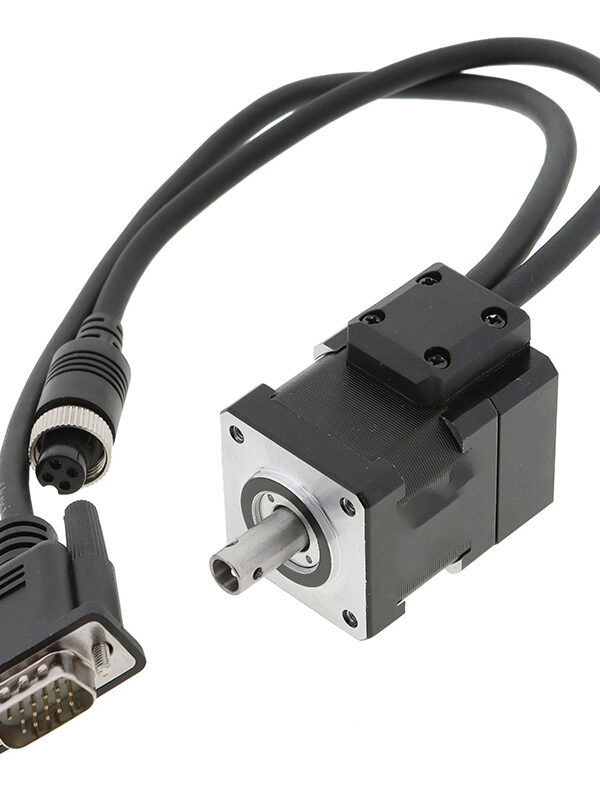
Closed-loop stepper motors, also known as servo stepper motors, incorporate a feedback system to continuously monitor and adjust the motor’s performance. This feedback helps optimize the motor’s torque, speed, and efficiency, making it a more reliable choice for applications where precise motion control is critical. The feedback system ensures that the motor operates at peak performance, reducing issues like overheating and power consumption.
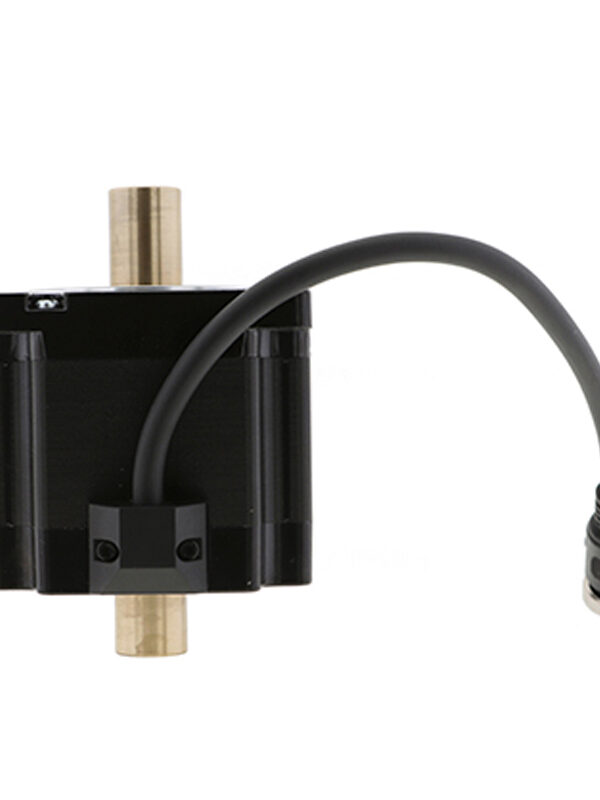
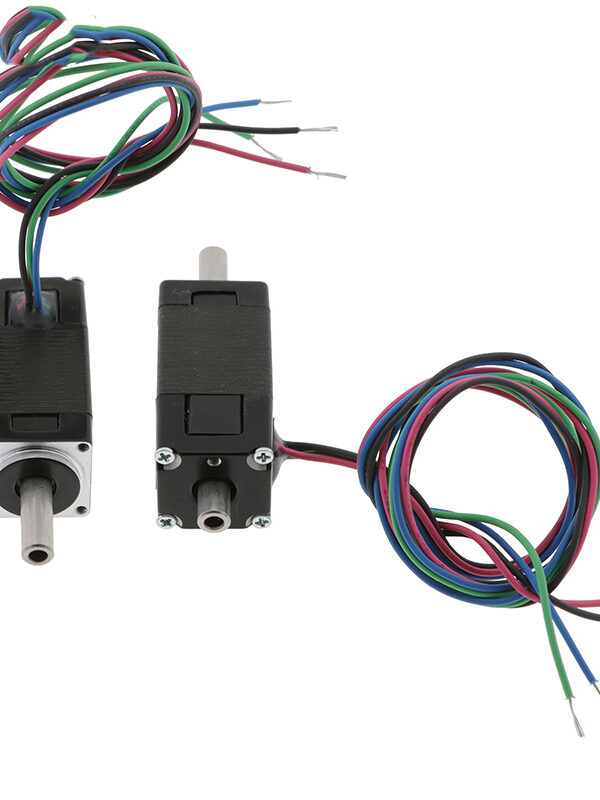
Integrated stepper motors combine the motor and driver into a single compact unit. This integration simplifies the setup process and reduces wiring complexity. They are often used in applications where space is limited, and ease of installation is a priority. While they offer convenience and compactness, they may have some limitations in terms of flexibility and customization compared to separate motor-driver setups.
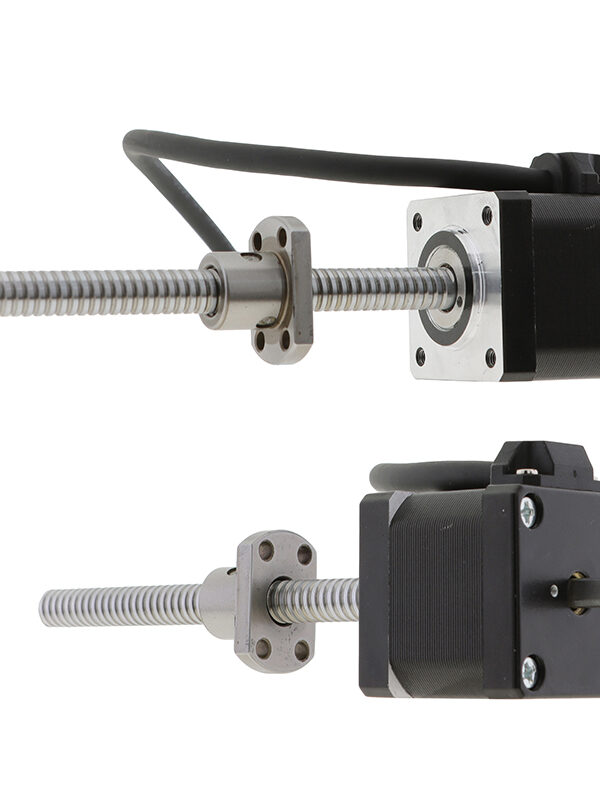
Linear stepper motors are designed to provide linear (straight-line) motion rather than rotational motion. They function similarly to traditional rotary stepper motors but instead move a carriage or load directly along a linear path. These motors are used in applications requiring precise and controlled linear movement, making them ideal for use in actuators, precision equipment, and robotic systems. Each type of stepper motor offers distinct advantages depending on the application. While permanent magnet stepper motors are simple and cost-effective, hybrid stepper motors combine the best features of PM and VR motors for high-performance needs. Closed-loop stepper motors enhance efficiency with feedback control, and integrated stepper motors offer convenience and space-saving designs. Linear stepper motors stand out when linear motion is required for applications like robotics and automated machines. When selecting the right stepper motor, consider factors like torque, precision, application requirements, and size limitations. Understanding the unique features of each type will help you make an informed decision that ensures optimal performance for your project.
| Motor Type | Torque | Accuracy | Common Applications |
|---|---|---|---|
| Hybrid Stepper | High | Very High | 3D Printers, CNC Machines, Robotics |
| Closed Loop Stepper | Medium to High | High | Industrial Automation, Robotics, Conveyor Systems |
| Integrated Stepper | Medium | Medium | Small Automated Systems, Cameras, Robotics |
| Permanent Magnet Stepper (PM) | Medium | Moderate | Printers, Robotics, Small Applications |
| Variable Reluctance Stepper (VR) | Low | High | Precision Machines, Medical Devices |
| Linear Stepper | Medium | Very High | Linear Actuators, Automated Machines, CNC |
When selecting a stepper, consider the following factors:
Advantages:
Disadvantages:
If you are not sure which stepper motor is suitable for your application,
our technical team can help you select the right motor based on torque,
speed, voltage, and control requirements.
Choosing the right stepper motor depends on several factors including
required torque, operating speed, load characteristics, and control method.
You may explore our technical guides and comparison articles to better understand
the differences between various stepper motor types.
Browse our stepper motor products below or contact us for customized solutions.
Stepper motors are widely used across various industries due to their ability to deliver precise motion control. Some of the most common applications include:
Stepper motors are a vital component for precision motion control systems. Whether you’re working with a NEMA 17 or NEMA 23 stepper motor, understanding the motor types, sizes, and how they work will ensure you make the right choice for your application. Consider the required torque, motor size, and compatibility with your driver and power supply when making a selection. For more information on big stepper motors, miniature stepper motors, stepper motor drivers, and stepper motor controllers, browse our full collection and find the best solution for your project.
Showing 1–12 of 140 results