Our Location
1103A Tianhui Building, Yeqin 1st Road, Longcheng Street, Shenzhen, Guangdong, China
1103A Tianhui Building, Yeqin 1st Road, Longcheng Street, Shenzhen, Guangdong, China
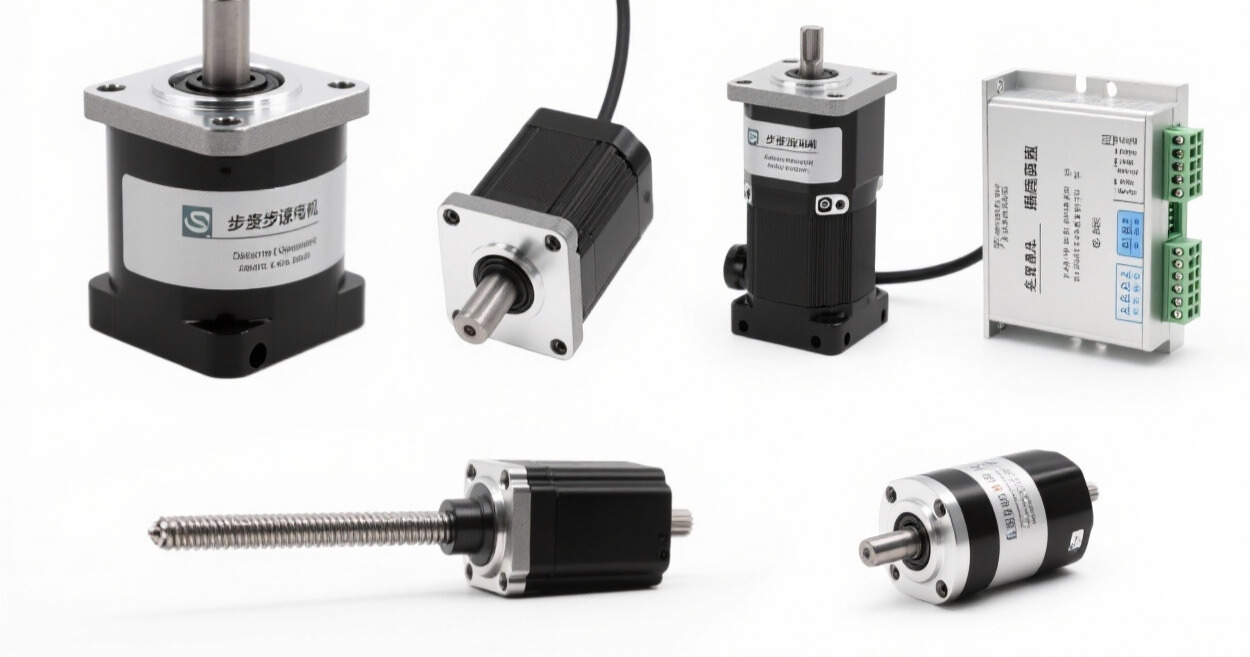
Stepper motors are widely used in automation, CNC machinery, and precision instruments thanks to their simple structure, high torque, low cost, and easy control. However, one common drawback is the squealing or high-pitched noise that may occur, especially at low speeds in open-loop control systems. Understanding the causes of this noise and how to reduce it is critical for ensuring reliable performance and a quieter working environment.
The noise in stepper motors typically comes from two areas: the drive circuit and the mechanical structure.
Since square-wave currents contain many harmonics, using sine-wave or microstepping drives is recommended. These methods generate current waveforms closer to sinusoidal, reducing vibration and audible noise.
Mounting the motor with vibration-damping materials such as rigid rubber pads can prevent resonance with the base plate. This method is widely used, but keep in mind that rubber insulators reduce heat conduction, so monitor motor temperature carefully.
Squealing noises in stepper motors are mainly caused by high-frequency harmonics, insufficient structural stiffness, and resonance effects. By improving the drive circuit, optimizing the motor’s design, and applying proper damping techniques, you can effectively minimize noise and extend the motor’s service life.
Need a quieter and more reliable stepper motor solution? Check our NEMA17 stepper motor options designed with noise reduction.
If you are new to stepper motors, you may first want to read
What Is a Stepper Motor
and
How Does a Stepper Motor Work
to understand the basic principles.
Stepper motors are widely used in automation and motion control systems.
To explore different specifications and configurations, please visit our
Stepper Motor solutions
.