Our Location
1103A Tianhui Building, Yeqin 1st Road, Longcheng Street, Shenzhen, Guangdong, China
1103A Tianhui Building, Yeqin 1st Road, Longcheng Street, Shenzhen, Guangdong, China
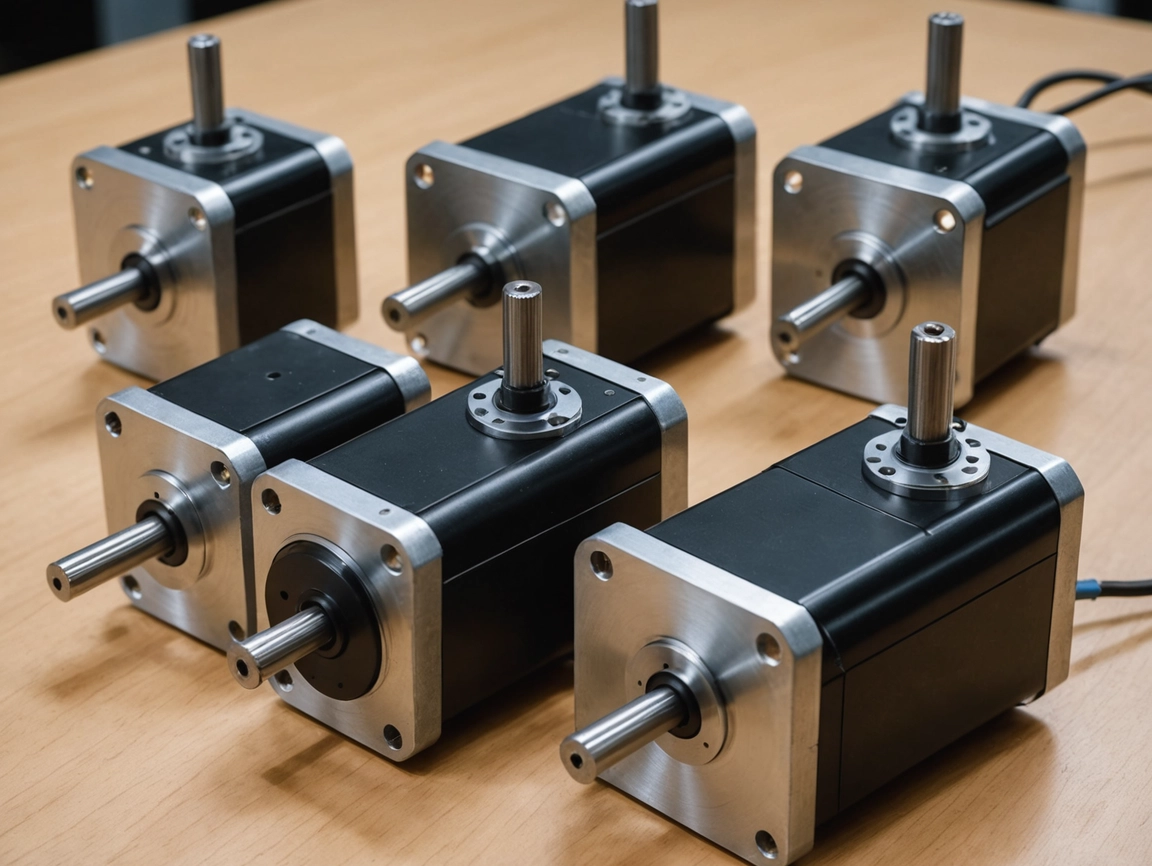
Stepper motors are available in several different types, each designed to meet specific performance, accuracy, and application requirements. Understanding the differences between stepper motor types helps engineers and system designers choose the right motor for their project.
If you are new to stepper motors, you may first want to read What Is a Stepper Motor and How Does a Stepper Motor Work to understand the basic principles.
For industrial-grade options and configurations, you can explore our Stepper Motor solutions used in automation, CNC, and robotics applications.
Permanent magnet stepper motors use a magnetized rotor and a simple stator structure. They typically offer good torque at low speeds and are easy to control.
PM stepper motors are commonly used in small office equipment, consumer devices, and low-power positioning systems.
Variable reluctance stepper motors feature a soft iron rotor without permanent magnets. Motion is produced by minimizing magnetic reluctance as the stator coils are energized.
VR stepper motors are used in applications where high speed and rapid acceleration are required, but torque demand is relatively low.
Hybrid stepper motors combine the advantages of permanent magnet and variable reluctance designs. They provide higher torque, better accuracy, and finer step resolution.
Most industrial NEMA stepper motors, such as NEMA 17, NEMA 23, and NEMA 34, are hybrid stepper motors.
Hybrid stepper motors are widely used in CNC machines, 3D printers, robotics, packaging equipment, and industrial automation systems.
In addition to structural types, stepper motors can also be categorized by their control method.
Open-loop stepper motors operate without feedback and rely on pulse commands from the controller. Closed loop stepper motors integrate encoders to provide real-time position feedback, preventing step loss and improving efficiency.
Closed loop stepper motors are especially suitable for high-speed, high-load, or precision-critical applications.
When selecting a stepper motor type, consider factors such as required torque, operating speed, accuracy, load characteristics, and control method.
For most industrial applications, hybrid stepper motors offer the best balance between performance, reliability, and cost.
You can find a wide range of configurations, including closed loop and encoder-equipped models, in our Stepper Motor product category .
If you are planning to select a stepper motor for your application, this step-by-step guide explains the key factors you should consider: How to Choose a Stepper Motor .