Understanding the Differences Between Geared Stepper Motors and Integrated Stepper Motors
Stepper motors are a vital part of many automation, robotics, and precision control applications. When choosing the right motor for your needs, you will encounter two popular types: geared stepper motors and integrated stepper motors. While both share the same basic principle of operation, their designs, purposes, and ideal applications differ. In this article, we will compare both motor types, their characteristics, advantages, and disadvantages to help you make an informed choice for your next project.
⚙️ Similarities Between Geared Stepper Motors and Integrated Stepper Motors
Before diving into the differences, let’s first explore the key similarities that both geared and integrated stepper motors share:
1. Core Operating Principle
Both geared stepper motors and integrated stepper motors are stepper motors. This means they operate on the same core principle: the motor moves a fixed number of degrees with each pulse received from a controller. Step angle is the key unit of motion in both types. When a pulse is sent, the motor moves by a fixed step angle, providing precise and repeatable motion control. Both motors require a dedicated stepper motor driver for proper function.
2. Open-Loop Control
In typical applications, both types of motors use open-loop control, meaning the system assumes the motor has reached its designated position without needing real-time feedback like a servo motor. This simplicity reduces system complexity and cost.
3. Basic Components
Both motors include the essential stepper motor components: stator, rotor, and bearings. These components work together to create precise rotational movement.
4. Low-Speed, High-Torque Characteristics
Compared to conventional DC motors, both geared and integrated stepper motors produce high torque at low speeds, which is one of the inherent characteristics of stepper motors. This feature is vital in many precision control systems like robotics and automation.
🔧 Key Differences Between Geared Stepper Motors and Integrated Stepper Motors
The fundamental difference between geared and integrated stepper motors is their design and purpose. Let’s explore these key differences:
1. Core Structure and Purpose
- Geared Stepper Motor: This motor consists of a stepper motor coupled with an external gearbox. The main purpose of adding the gearbox is to reduce speed while increasing output torque. This combination allows for precise low-speed control and higher torque at lower speeds.
- Integrated Stepper Motor: An integrated stepper motor combines the motor, driver, and often the controller into a single unit. The goal is to simplify wiring, save space, and improve usability by combining all components into a compact form.
2. Output Characteristics
- Geared Stepper Motor: Geared stepper motors deliver high torque at low speeds. The output shaft speed is significantly reduced compared to the motor shaft, but the torque increases substantially, making it ideal for high-torque applications like robotic joints and automation systems.
- Integrated Stepper Motor: Integrated stepper motors have output characteristics similar to the base motor, but the performance may be more stable due to the optimized integration of the driver and motor. These motors are more compact and suited for applications where space is limited.
3. System Configuration
- Geared Stepper Motor: The geared stepper motor requires external drivers and controllers (such as a PLC or microcontroller) to operate. The system setup is more complex with multiple wiring components.
- Integrated Stepper Motor: The integrated stepper motor is a plug-and-play solution that requires only DC power and signal inputs (like pulse and direction signals) to function. This makes it much easier to install, with fewer wiring connections.
4. Wiring Complexity
- Geared Stepper Motor: Wiring for a geared stepper motor can be complex, as it requires connecting the motor to an external driver and controller. Additional wires are necessary for power and signal connections.
- Integrated Stepper Motor: Integrated stepper motors reduce wiring complexity significantly. Since the motor and driver are combined into a single unit, typically only a multi-core cable (for power and signal) is needed.
5. Precision and Backlash
- Geared Stepper Motor: The addition of a gearbox improves the theoretical precision by dividing the step angle. For example, a motor with a 1.8° step angle will achieve a theoretical step of 0.18° with a 10:1 reduction ratio. However, gear backlash can affect the motor’s precision, especially in reverse motion.
- Integrated Stepper Motor: Integrated stepper motors typically do not suffer from backlash (unless an external gearbox is added). Precision is determined by the microstepping abilities of the motor and driver, providing smoother operation and better noise immunity.
6. Rigidity
- Geared Stepper Motor: Geared stepper motors tend to have higher rigidity due to the gear structure, which can absorb forces from sudden load changes, making it ideal for high-torque tasks.
- Integrated Stepper Motor: The rigidity of integrated stepper motors depends on the motor itself. It may not provide as high rigidity as geared stepper motors since it lacks the external gear system.
7. Cost
- Geared Stepper Motor: While the cost of the motor and gearbox might be lower, the additional cost of external drivers and controllers can increase the overall system cost.
- Integrated Stepper Motor: The cost of the integrated stepper motor may be higher due to the inclusion of the driver and controller, but it reduces overall system complexity, making it more cost-effective in compact systems.
8. Typical Applications
- Geared Stepper Motor: Ideal for applications that require high torque, such as robotic joints, automated lifting devices, valve control, and conveyor systems.
- Integrated Stepper Motor: Perfect for applications where space is limited and wiring needs to be minimized, such as small automation systems, medical devices, robots, and 3D printers.
🔚 Conclusion: Which Motor is Right for You?
For High Torque and Low Speed: Choose Geared Stepper Motors
If your project requires greater torque or higher theoretical resolution (like smaller step angles), and you can accept some backlash and lower speeds, the geared stepper motor is the ideal choice. These motors are perfect for robotic arms, heavy-duty applications, and precision tasks that need high torque.
For Compact and Simplified Systems: Choose Integrated Stepper Motors
If you are looking to simplify system wiring, save space, and improve reliability, then the integrated stepper motor is the best option. This motor makes installation easier and is ideal for compact spaces like medical equipment, precision instruments, and small automation setups.
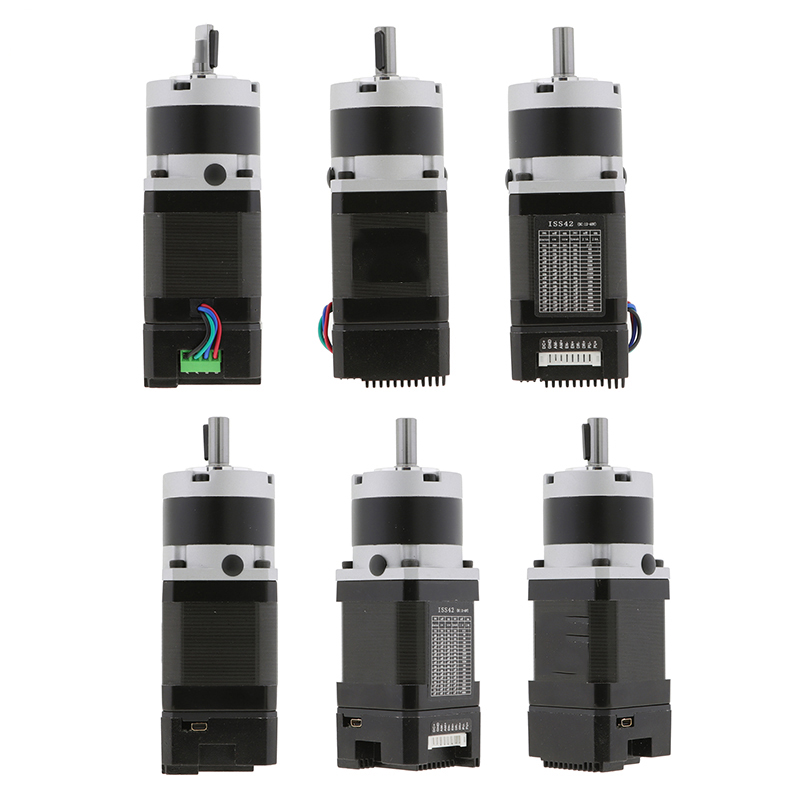
Important Note: These two motor types are not mutually exclusive. Some products combine integrated stepper motors with planetary gearboxes, giving you both the benefits of simplification and high torque, although at a higher cost. Always choose based on your core needs—whether you need huge torque or a simplified system.
🔗 Additional Resources
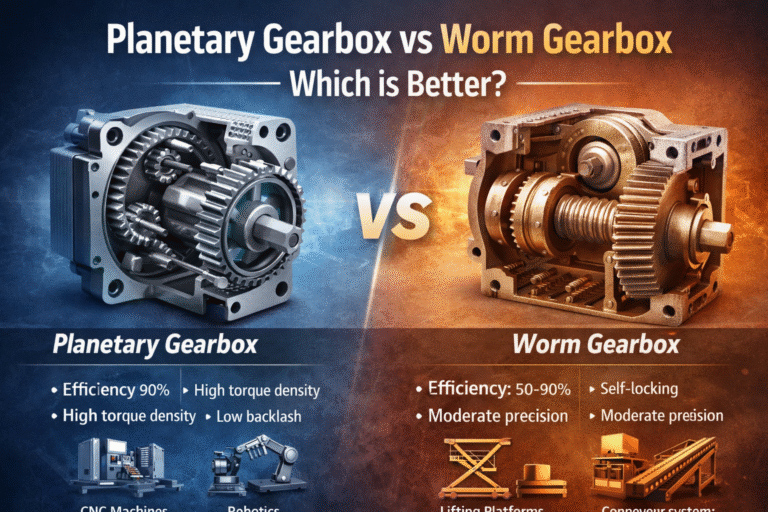
To learn more about planetary gearboxes, check out our detailed comparison: High Precision Gearbox vs Planetary Gearbox vs Precision Reducer
Find The Different Of The Geared and Integrated Stepper Motor From SSS-Motors
Geared Stepper Motor vs Integrated Stepper Motor