Finding a balance between size, torque, and cost in micro stepper motor design is often a significant engineering challenge.
A Failed Case: Why Your NEMA 11 High Torque Gearbox Stepper Motor with 0.8Nm Torque in 63mm Might Be Impossible
Author: Shenzhen Sunshine Sea Technology Co.,Ltd(SSS-Motors Betty Yuan), Your Partner in Precision Motion Solutions.
Here at SSS-Motors, we thrive on solving our clients’ most challenging motion control problems. From complex automation systems to precision medical devices, we’ve successfully sourced and customized countless stepper and DC motors. But sometimes, the most valuable lessons come not from our successes, but from our failures.
Today, we want to share a detailed case study of a project where we could not meet a client’s specifications. A client from Norway approached us with a demanding requirement for a NEMA 11 stepper motor integrated with a planetary gearbox. Despite our best efforts and deep collaboration with our engineering team and factory partners, we hit a wall defined by the unyielding laws of physics.
This blog post is a deep dive into that failure. We believe in transparency and education. By understanding why this specific configuration was unattainable, you can make more informed decisions in your own stepper motor selection process.
The “Impossible” Specification: A Breakdown
Our client’s requirement was deceptively simple:
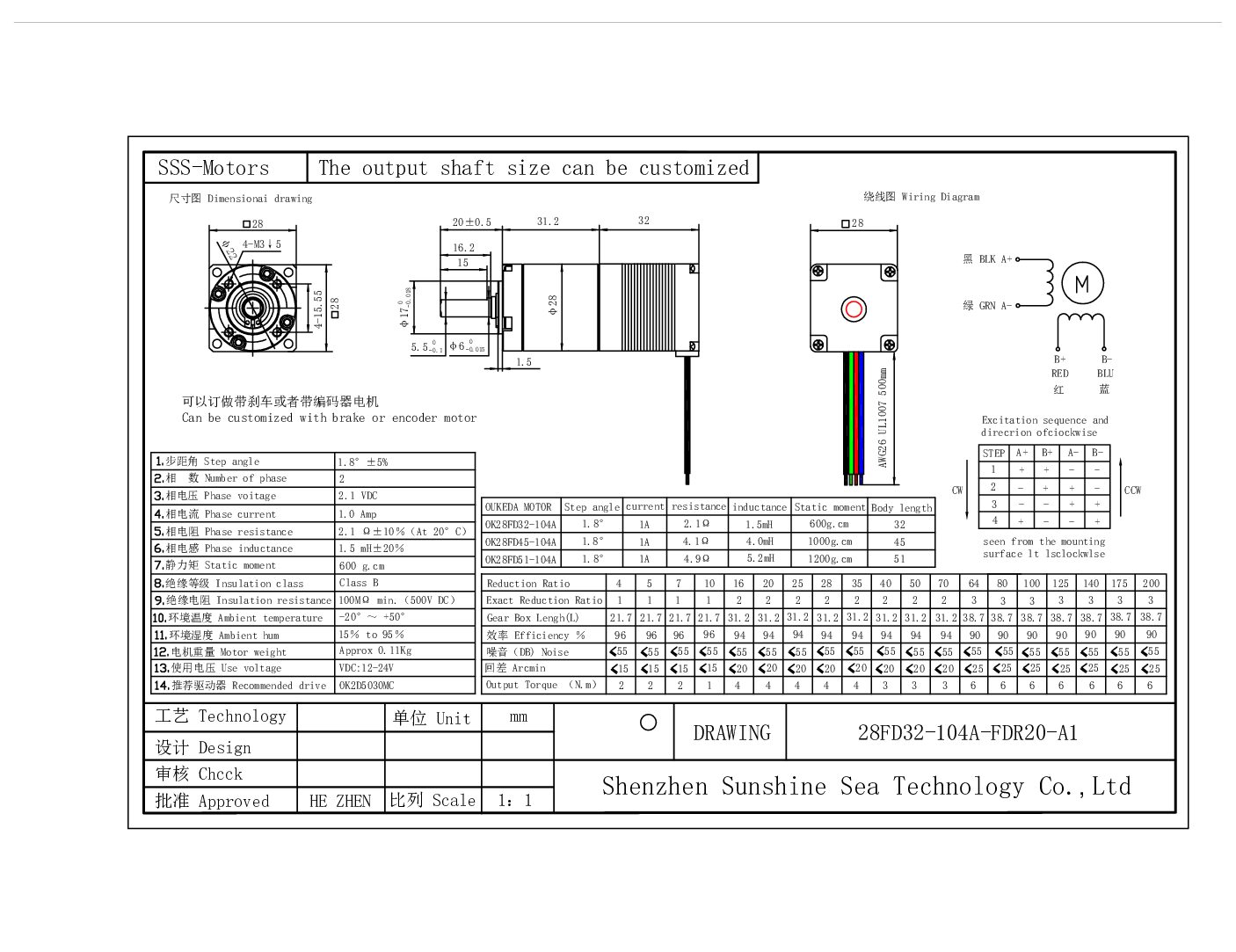
Stepper Motor Frame Size: NEMA 11 (28mm x 28mm flange)
Total Assembly Length: ~63mm (including motor and gearbox+shaft Length)
The challenge was immediately apparent to our engineers: achieving a very high torque within an extremely compact form factor.
Our Two-Pronged Approach and Why It Failed
We pursued two primary development paths with our manufacturing partners, both of which ultimately failed to meet all criteria.
Path 1: Prioritizing the Size Constraint (53mm Length)
Our first approach was to strictly adhere to the original length requirement of 53mm for the motor+gearbox assembly.
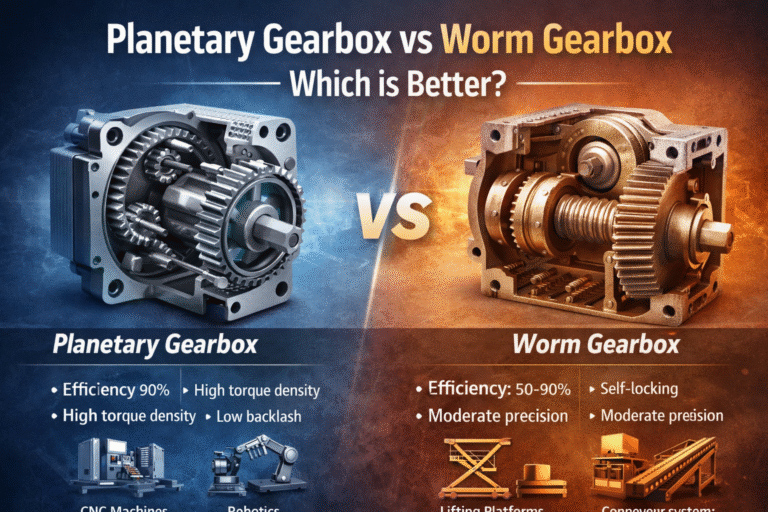
The Solution: We designed an ultra-compact assembly using a very short NEMA 11 motor body and a correspondingly small planetary gearbox with a high reduction ratio.
The Failure: The maximum output torque we could achieve was only 0.5 Nm.
The Technical Reason: A shorter motor body means a shorter rotor and fewer magnetic fields, drastically reducing the motor’s inherent detent torque and holding torque. Furthermore, the miniature gears within the tiny gearbox have a very low “modulus.” Simply put, smaller gears cannot transmit high torque without risking structural failure or excessive wear. The system reached its physical limit.
Path 2: Prioritizing the Torque Requirement (0.8 Nm)
Learning from the first failure, we shifted our focus to achieving the required 0.8 Nm torque.
The Solution: We selected a longer, more powerful NEMA 11 motor body to generate a higher initial torque. We then paired it with a robust planetary gearbox (with ratios like 20:1 or 50:1) capable of handling and amplifying this torque.
The Failure: This successful combination resulted in a total assembly length of 78mm, significantly exceeding the client’s 53mm limit.
The Technical Reason: Torque is a function of force and distance (lever arm). To generate more torque, you need a more powerful electromagnetic circuit (a longer motor) and stronger gears (a larger gearbox). There is no way around this fundamental principle. The gear ratio amplifies the motor’s torque, but it also requires physical space for the additional gear stages.
The Inescapable Trade-Off: The Iron Triangle of Motor Design
This case perfectly illustrates what we call the “Iron Triangle” of micro motor design. You can typically optimize for two of the following three, but not all three simultaneously:
High Torque
Compact Size
Low Cost
In our client’s case, the demands for both High Torque and an extremely Compact Size created a conflict that could not be resolved within a standard stepper motor architecture without a significant cost increase.
The High-Performance, High-Cost Solution: Coreless DC Motors with Planetary Gearboxes
Coreless DC motors offer much higher power and torque density in a smaller package compared to stepper motors. They can be the key to meeting extreme size-to-torque ratios.
The Catch: This performance comes at a premium. These motors, along with their required electronic controllers (drivers), are significantly more expensive than a comparable stepper motor system. They also add complexity to the system design.
The Practical Compromise: Re-evaluating the Requirements
The most effective solution often lies in revisiting the initial specs. We asked our client a crucial question: “Is the 63mm total length an absolute and unchangeable hard constraint?”
Often, a relaxation of just 5-10mm in length (e.g., from 63mm to 70mm) can open up a world of reliable, cost-effective nema 17 high torque gearbox stepper motor options that can easily meet the torque requirement. Similarly, it’s always worth confirming if the 0.8 Nm is a peak, intermittent, or continuous holding torque, as this can also influence the design.
Key Takeaways for Your Next Motor Selection
Understand the Trade-Offs: You cannot defy physics. High torque in a small size is the most challenging demand in motor design.
Consult Early: Engage with your supplier or a technical expert during the conceptual design phase. We can provide realistic feedback on feasibility before your design is finalized.
Be Flexible with Key Parameters: Identify which specifications are “hard” and which are “soft.” A small adjustment to a soft constraint can save significant time and cost.
Consider the Total System Cost: A seemingly cheaper motor might require a costly custom gearbox, while a more expensive motor might be a drop-in solution.
Newsletter Updates
Enter your email address below and subscribe to our newsletter