Our Location
1103A Tianhui Building, Yeqin 1st Road, Longcheng Street, Shenzhen, Guangdong, China
1103A Tianhui Building, Yeqin 1st Road, Longcheng Street, Shenzhen, Guangdong, China
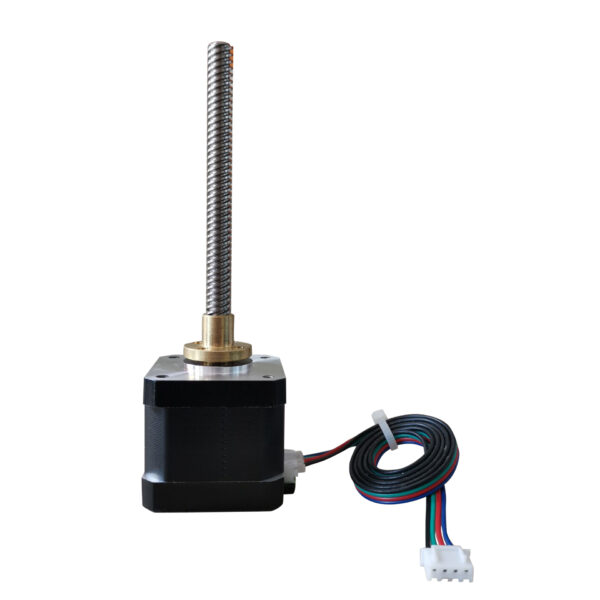
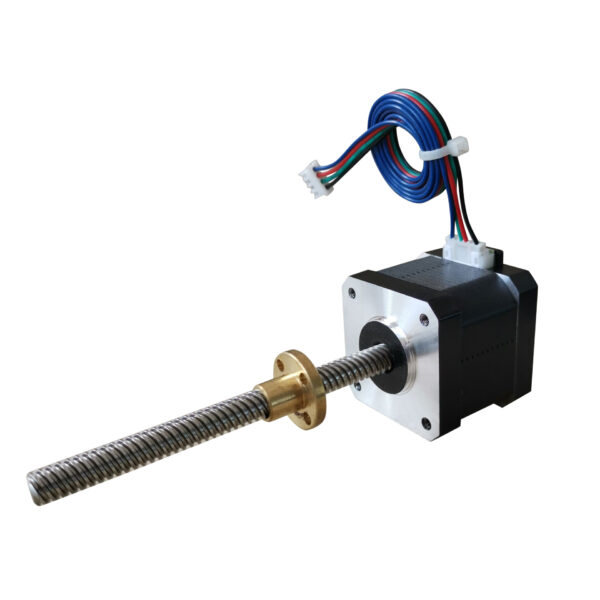
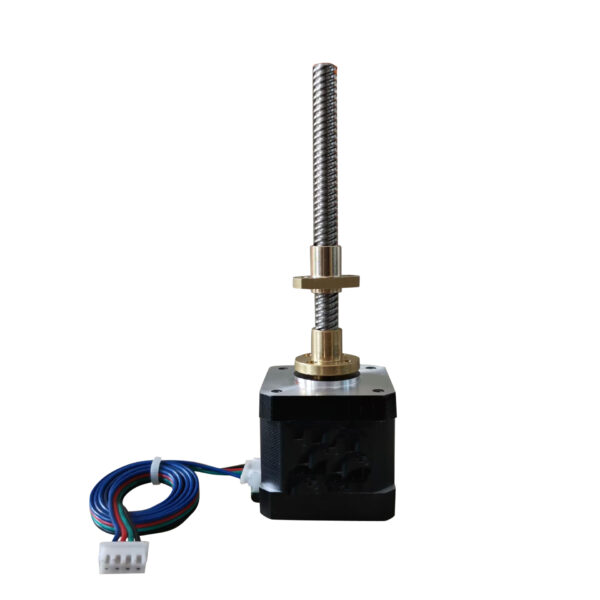
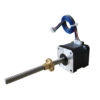
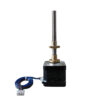
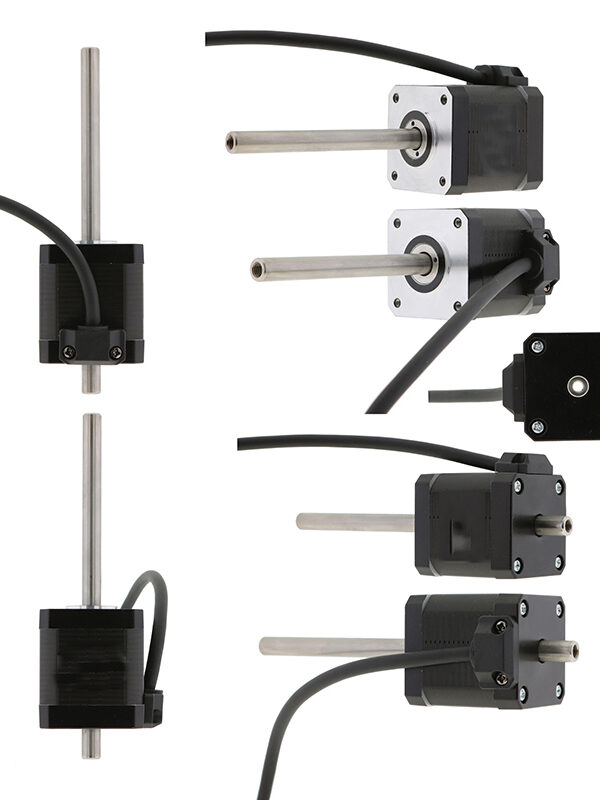
This NEMA 17 linear motor integrates a high-precision lead screw stepper motor (Tr8×8), delivering smooth linear motion, 0.42Nm torque, and stable thrust output. Ideal for automation, CNC, 3D printers, and precision linear actuator systems.
This compact and efficient linear motor integrates a NEMA 17 stepper motor with a precision-machined Tr8×8 lead screw, making it a reliable solution for linear drive applications. As a widely used lead screw stepper motor, it offers excellent thrust, smooth motion, and repeatable positioning for automation equipment, CNC devices, and laboratory instruments.
Compared to external coupler systems, this linear stepper motor eliminates alignment issues and provides a fully integrated lead screw actuator design, ideal for compact engineering environments. Whether you call it a “lead screw stepper,” “linear drive motor,” or simply a “linear motor,” the functionality remains consistent: converting rotational motion into precise, controlled linear displacement.
| Item | Value |
|---|---|
| Step Angle | 1.8° ±5% |
| Number of Phases | 2 |
| Rated Voltage | 2.2 VDC |
| Phase Current | 2.0 A |
| Phase Resistance | 1.1 Ω ±10% |
| Phase Inductance | 2.6 mH ±20% |
| Static Torque | 0.42 N·m |
| Insulation Class | Class B |
| Insulation Resistance | 100MΩ min (500V DC) |
| Ambient Temperature | -20°C ~ +50°C |
| Ambient Humidity | 15% ~ 95% |
| Motor Weight | Approx. 0.3 kg |
| Recommended Driver | 2D4020A |
| Lead Screw Item | Value |
|---|---|
| Type | Tr8 × 8 (4-start, 8mm lead) |
| Lead Screw Length | 100 mm |
| Nut Type | Standard brass nut |
| Dimension Item | Value |
|---|---|
| Motor Body Length | 40 mm |
| Flange Size | 42 mm |
| Mounting Hole Distance | 31 ± 0.1 mm |
| Shaft/Lead Screw Diameter | φ 8 mm |
| Connector | PH-6Y 2.0mm 6-Pin |
| Pin No. | Color | Function |
|---|---|---|
| 1 | Black | A+ |
| 3 | Red | A– |
| 4 | Green | B+ |
| 6 | Blue | B– |
| Step | A+ | B+ | A– | B– |
|---|---|---|---|---|
| 1 | + | + | – | – |
| 2 | – | + | + | – |
| 3 | – | – | + | + |
| 4 | + | – | – | + |
Ball screws use recirculating balls for extremely high efficiency and very low friction, ideal for high-end CNC or heavy-load precision systems.
Lead screws rely on sliding contact and are quieter, cheaper, and excellent for compact linear stepper motor actuators.
Both convert rotary motion to linear displacement. Ball screw actuators offer higher efficiency, while lead screw actuators (like this one) provide better self-locking and simpler mechanical design.
They refer to the same concept: a stepper motor with an integrated lead screw.
“Linear motor” highlights the motion output, while “lead screw stepper motor” highlights its mechanism.
Both belong to the family of linear drive motors and perform the same function.
Download the full specification sheet for detailed parameters, wiring guide, and performance curves.

Reviews
There are no reviews yet.