Our Location
1103A Tianhui Building, Yeqin 1st Road, Longcheng Street, Shenzhen, Guangdong, China
1103A Tianhui Building, Yeqin 1st Road, Longcheng Street, Shenzhen, Guangdong, China
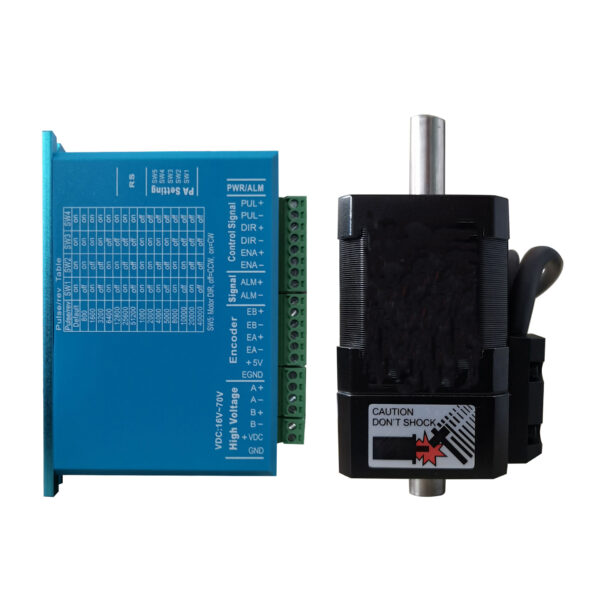
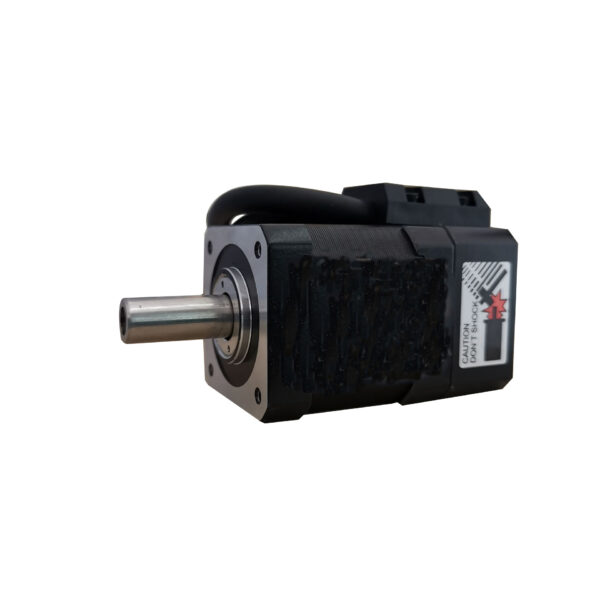
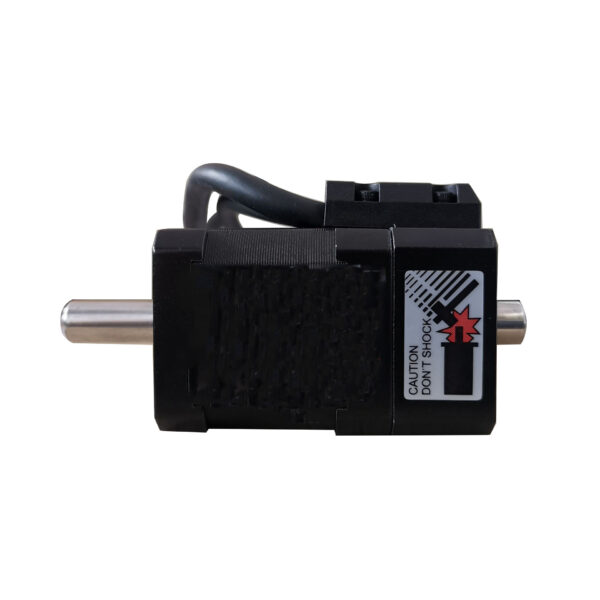
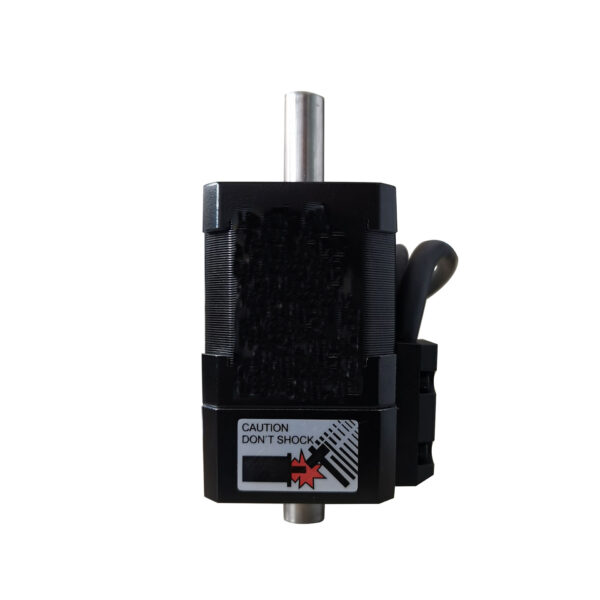
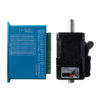
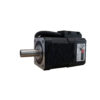
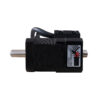
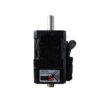
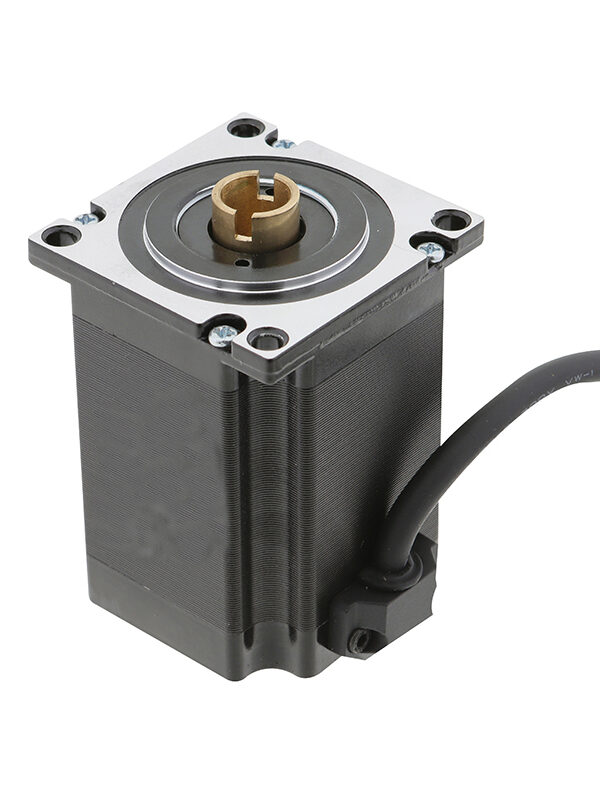
High-performance NEMA 17 double axis stepper motor with hollow shaft design, offering 0.45Nm torque, 1.7A current, and 1.8° step angle. Features an integrated encoder (1000 line, AB differential signal) for precise position feedback and control. Ideal for robotics, automation, and CNC systems.
This NEMA 17 double axis stepper motor with a hollow shaft design integrates an advanced encoder (1000 lines, AB differential signal) for precise position feedback and smooth motion control. It offers a holding torque of 0.45Nm and operates at DC 24-36V, making it an ideal choice for applications that require high accuracy, such as robotics, CNC, and automation systems.
| Parameter | Specification |
|---|---|
| Step Angle | 1.8° ±5% |
| Phase Voltage | 3.0 VDC |
| Phase Current | 1.7 Amps |
| Phase Resistance | 1.5 Ω ±10% (At 20°C) |
| Inductance | 3.0 mH ±20% |
| Static Torque | 0.45 Nm (63.72 oz·in) |
| Insulation Class | Class B |
| Insulation Resistance | 100MΩ Min. (500V DC) |
| Ambient Temperature | -20°C ~ +50°C |
| Motor Weight | Approx. 0.6 kg |
| Use Voltage | DC 24-36V |
| Recommended Driver | OK2D4020A |
| Color | Encoder Wire Description |
|---|---|
| Red | VDC (Power) |
| Black | Ground |
| Yellow | Channel A+ |
| Green | Channel A- |
| Blue | Channel B+ |
| White | Channel B− |
| Step | A+ | B+ | A− | B− | Direction |
|---|---|---|---|---|---|
| 1 | + | + | − | − | Clockwise (CW) |
| 2 | + | − | − | + | Counterclockwise (CCW) |
| 3 | − | + | − | + | Clockwise (CW) |
| 4 | − | − | + | + | Counterclockwise (CCW) |
Download the full specification sheet for detailed parameters, wiring guide, and performance curves.
What is an encoder on a motor?
An encoder on a motor is a sensor that provides real-time feedback about the motor’s position, speed, and direction. It helps ensure precise motion control.
What does an encoder do?
An encoder converts the motor’s rotational position into an electrical signal, which can then be used by a control system to adjust the motor’s movement and position in real-time.
What is the difference between encoder types?
Encoders can be incremental or absolute. Incremental encoders measure changes in position, while absolute encoders provide a specific position value. Differential encoders provide two signals to improve accuracy.

Reviews
There are no reviews yet.